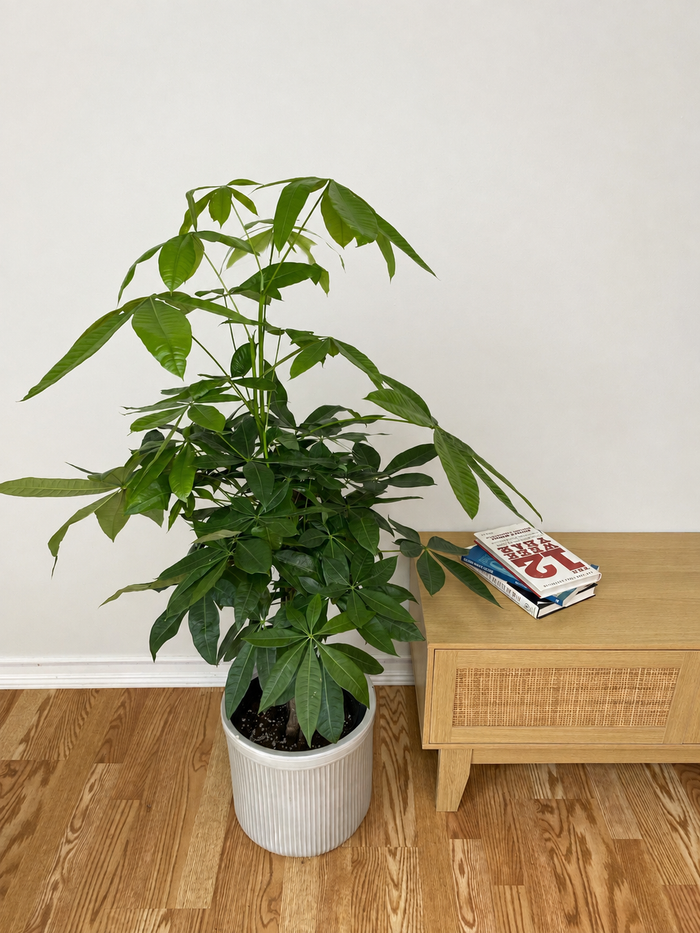
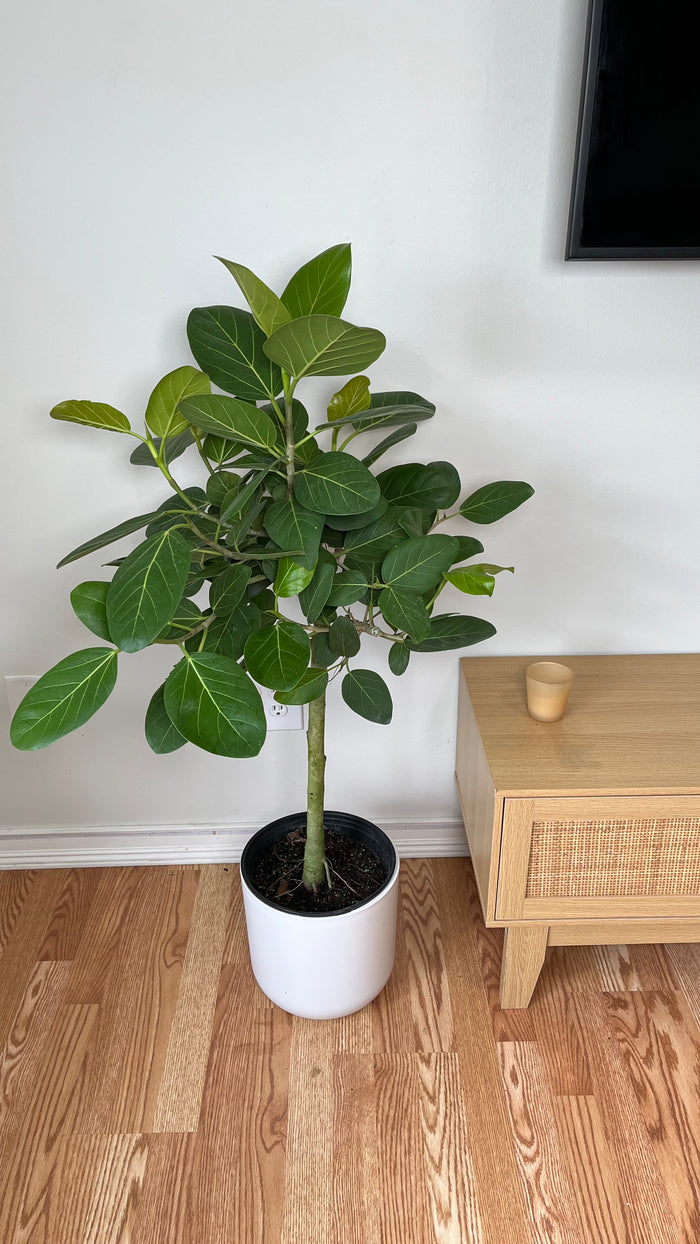
Ponytail Palm Care Instructions
Thank you for choosing Joey’s Houseplants! Your support is greatly appreciated. Enjoy your new Ponytail Palm!
Your plant may show a little stress after shipping. Unbox it promptly and place it in bright, indirect light. Avoid repotting or moving it repeatedly while it adjusts. A few brown tips or older leaves can occur after the move.
Quick Care Summary
Ponytail Palm (Beaucarnea recurvata) is a drought-tolerant plant with a thick trunk that stores water. Give it bright, indirect light. Let the soil dry out 100% between waterings, then water thoroughly and never leave the pot sitting in water. A pot with drainage and a fast-draining soil mix are essential.
Light
Place your Ponytail Palm in bright, indirect light. Keep it out of strong direct sun, which can scorch leaves, especially while it is adjusting to a new home.
- South-facing window: Set the plant back from the glass or use a sheer curtain to provide bright, indirect light.
- East-facing window: Place it near the window where it receives bright, indirect light.
- West-facing window: Filter hot afternoon sun or move the plant back from the window.
- North-facing window: Keep it close to a large, unobstructed window; add a grow light if the space is too dim.
Rotate the pot occasionally so the crown grows evenly.
Water
Check the soil after arrival. Do not water just because the plant was shipped. Let the soil dry out 100% between waterings.
Check several spots and depths with a finger or moisture meter. Once the soil is completely dry throughout the pot, water slowly and thoroughly until excess flows from the drainage holes. Empty the saucer or decorative pot afterward.
In summer, it will typically need water about every 2–3 weeks. In winter, it will typically need water about every 3–6 weeks. These are estimates, not a fixed schedule: always confirm that the soil has dried out completely before watering. Light, temperature, and pot size can change how quickly it dries.
If you are unsure whether it needs water, err on the side of caution and do not water yet. Ponytail Palms store a lot of water in their thick trunks. Soil that stays wet, a soft base, or widespread yellowing can point to overwatering.
Soil
Use a fast-draining cactus or succulent mix, or a houseplant mix amended generously with perlite and coarse material for airflow. Always use a pot with drainage holes. Dense soil that stays wet increases the risk of root and stem rot.
Fertilizer
Fertilizer is optional. If you want to encourage growth, use a balanced houseplant fertilizer at half the label strength about once a month during spring and summer, when new growth is active. Wait at least two weeks after delivery before feeding. Skip fertilizer in fall and winter or while the plant is stressed, and never exceed the label directions.
Repotting
Ponytail Palms grow slowly and do well slightly snug in their pots. Avoid repotting for the first month so the plant can adjust to its new environment. Repot only when roots have filled the container or are growing heavily from the drainage holes, preferably during spring or summer. Choose a pot with drainage only 1–2 inches larger than the current pot. A much larger pot can keep the soil wet too long.
You can place the plastic grow pot inside a decorative pot until repotting is needed. Remove it to water and let it drain fully before putting it back. Keep the thick trunk base above the soil line when repotting.
Humidity & Temperature
Average indoor humidity is fine; no misting is needed. Keep the plant in a warm spot, ideally around 60–85°F, and protect it from cold drafts and heating or air-conditioning vents. Bring it indoors before nights turn cool.
It can spend warm months outdoors in bright, indirect light. Protect it from strong direct sun and keep the pot from sitting in rainwater.
Pet Safety
Ponytail Palm (Beaucarnea recurvata) is considered non-toxic to cats and dogs.
Accessories
The following instructions apply if your order included a plant stand or water meter.
Plant Stand
Connect the stand pieces at their center points and place the stand on a stable, level surface. Open it wide, set the pot in the center while holding it securely, then gently bring the ends inward until they fit snugly around the pot.
Water Meter
Insert the probe into several areas of the soil without forcing it through roots. Check deep in the pot and confirm with a finger if possible. Water thoroughly only when the soil is completely dry throughout. Wipe the probe after use and do not leave it in the soil.
Questions?
If you have questions or concerns about your Ponytail Palm, please contact support@joeyshouseplants.com. Thank you for supporting Joey’s Houseplants!